
The right artwork should feel connected to the room—not like a small object floating on a large wall or an oversized piece pressing down on the furniture below it. This wall art size guide gives you a practical way to choose dimensions before you buy, whether you are decorating above a sofa, bed, desk, console, fireplace, or an open wall.
The quick answer: When art hangs above furniture, aim for a total artwork width of about 60% to 75% of the furniture below it. Two-thirds is an easy starting point. Keep the bottom of the frame roughly 6 to 10 inches (15 to 25 cm) above the furniture, then adjust for the room and the visual weight of the piece.
These are guidelines, not laws. A deeply framed or textured piece can look more substantial than a flat print of the same dimensions. The goal is proportion: the art, furniture, and surrounding wall should read as one arrangement.

The Wall Art Sizing Rules to Remember
Start with the space, not a standard print size
It is tempting to start with familiar sizes such as 16 by 20 or 24 by 36 inches. Measure the wall and furniture first. Standard dimensions are convenient, but your room—not a catalog—determines what looks balanced.
Measure the usable wall width, excluding door trim, windows, and tall lamps. Above furniture, measure the furniture width. Then check the finished outside dimensions of the art; a mat or wide frame can add considerable visual size.
A Simple Wall Art Size Calculator
You do not need a special tool. Multiply the width of the furniture by 0.60 for the smaller end of the range and by 0.75 for the larger end.
For an 84-inch sofa, the calculation gives 50 to 63 inches. A single piece or grouping in that range usually feels anchored. Stay near the lower end for a quieter look and the upper end for a stronger focal point.
| Furniture width | Recommended art width | Furniture width | Recommended art width |
|---|---|---|---|
| 48 in | 29–36 in | 122 cm | 73–91 cm |
| 60 in | 36–45 in | 152 cm | 91–114 cm |
| 72 in | 43–54 in | 183 cm | 110–137 cm |
| 84 in | 50–63 in | 213 cm | 128–160 cm |
| 96 in | 58–72 in | 244 cm | 146–183 cm |
On a blank wall, art can occupy roughly 55% to 75% of the usable width. Exclude space interrupted by a lamp, plant, open door, or cabinet.

How to Choose Wall Art Size by Room
Above a sofa
Measure the full sofa, not just the cushions. For an 84-inch sofa, aim for about 50 to 63 inches of total artwork width. That can be one horizontal piece, a diptych, or a compact grouping. Hang the bottom edge 6 to 10 inches above the sofa.
A smaller framed work can still feel intentional as an accent. Connect it to a side table or lamp, or combine it with other pieces to create enough total width.
Above a bed
Use the headboard width, not the mattress alone. Aim for roughly two-thirds of that width and leave 6 to 8 inches (15 to 20 cm) above it. For many queen beds, art around 36 to 50 inches wide works; for a king, start around 48 to 60 inches.
Mount heavy work securely and keep it clear of anyone sitting up in bed. With a low ceiling, horizontal art usually feels calmer than a tall portrait piece.
Above a console, credenza, or desk
The 60% to 75% rule still helps, but objects on the surface count too. If a lamp or tall vase fills one side, center the complete arrangement rather than the frame alone.
In an office, align art with the work area rather than the entire wall. A small piece can create a focused moment; a larger horizontal work suits a broad wall. Keep it above the monitor sightline.
In a dining room
Measure the table, sideboard, or cabinet that supports the art. Long furniture pairs naturally with horizontal work or a measured row. Keep the art visually connected for seated viewers; furniture clearance takes priority over a fixed center height.
Above a fireplace
Use the fireplace opening or mantel as your reference. Art slightly narrower than the mantel usually feels settled. Allow breathing room for mantel objects and follow the manufacturer’s clearance requirements; heat, soot, and moisture can damage art.
In a hallway, stairway, or narrow wall
In a hallway, use narrower art near eye level. On stairs, let a measured sequence follow the rise. Vertical work can emphasize height; horizontal work can visually widen a short wall.
Horizontal or Vertical Wall Art?
Match the artwork to the available wall shape. Horizontal art echoes sofas, headboards, desks, and dining furniture. Vertical art fits narrow walls, spaces between windows, stair landings, and tall entries.
Square art is flexible, but a small square can feel isolated on a wide wall. Support it with furniture or lighting, place it in a narrower section, or repeat the shape in a measured group.

One Large Piece or a Gallery Wall?
One large piece creates a clear focal point and suits a calm, edited room. A gallery wall combines smaller works and fills a wider area with a more layered story.
Treat every frame and gap as one rectangle. The grouping should cover roughly 60% to 75% of the furniture below it. Keep 2 to 4 inches between pieces. Arrange everything on the floor first, then mark the outer dimensions on the wall.
How Frames, Texture, and 3D Art Change the Scale
Measurements tell only part of the story. A pale, unframed print feels lighter than a dark painting with a wide frame. Raised surfaces catch light and shadow, so 3D wall art can carry more visual weight at the same size.
Check the full dimensions, frame depth, and photographs from several angles. AetherCanvas pieces are 100% hand-painted, and raised mineral texture or metallic detail may appear more substantial as the light changes. Give deep pieces slightly more open wall around them.

Test the Size Before You Hang It
For a final check, mark the outer dimensions with painter’s tape or hang kraft paper cut to size. Leave it for a day and view it in different light.
- Check the composition from the room’s main entrance.
- Sit where you normally use the room and check the height.
- Look for crowding near doors, lamps, plants, and curtains.
- For textured work, check glare and shadows throughout the day.
Common sizing mistakes
- Skipping measurements: A favorite piece can still be the wrong scale.
- Using canvas size: Plan with the finished framed size.
- Hanging too high: Relate art to people and furniture, not the ceiling.
- Wide gallery gaps: Too much space makes pieces feel disconnected.
- Ignoring visual weight: Dark color, depth, and texture can make art feel larger.
Wall Art Size Guide FAQs
What is the most common wall art size?
There is no universal size, but 24 by 36 inches works in many average rooms. Smaller pieces suit narrow walls or groups; large walls may need 36 by 48 inches or more. Compare the finished dimensions with your own furniture and wall.
How big should wall art be above a couch?
Aim for 60% to 75% of the sofa width. For an 84-inch couch, that is roughly 50 to 63 inches. Leave 6 to 10 inches above the sofa.
How high should I hang wall art?
On an open wall, place the center around 57 to 60 inches from the floor. Above furniture, leave about 6 to 10 inches so both read as one composition.
Should wall art be wider than the furniture?
Usually no. Art wider than the furniture can feel top-heavy. Begin around 60% to 75% of the furniture width unless you are planning an intentional wall-to-wall installation.
Does the frame count toward the artwork size?
Yes. Use the complete outside width and height, including the frame and mat, when planning placement. Those are the dimensions the eye reads on the wall.
Once the scale is right, the rest becomes more personal: color, texture, composition, and the atmosphere you want the room to hold. You can browse all AetherCanvas artwork, explore the philosophy behind the Five Elements, or visit the AetherCanvas journal for more art and interior guidance.
Find the Right Piece for Your Space
Use your measurements as a guide, then choose the artwork whose color, texture, and presence feel at home in the room.
Explore All Artwork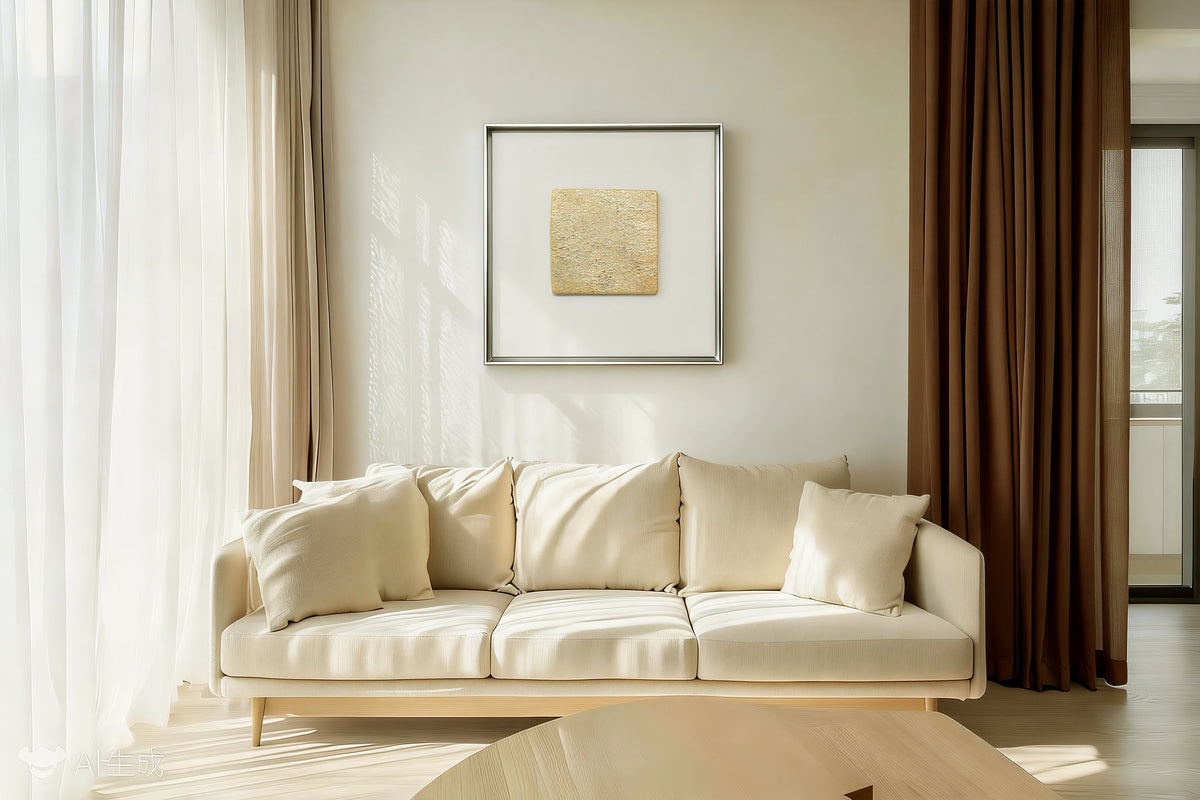

Leave a comment
This site is protected by hCaptcha and the hCaptcha Privacy Policy and Terms of Service apply.